
Transformation of an 8,000 sqm office for a global advisory organization [CASE STUDY]
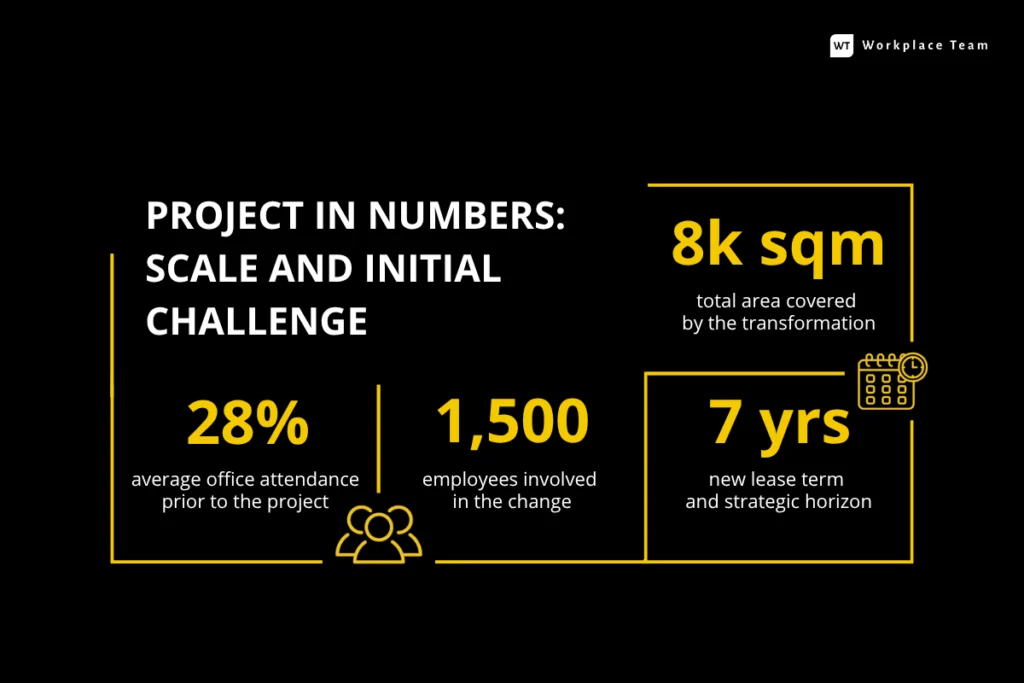
Delivering a workplace strategy for one of the world’s largest audit and advisory firms was a project of exceptional scale and complexity. With more than 8,000 sqm of office space, nearly 1,500 employees, diverse business lines, and a highly mature organizational structure, the challenge required far more than expert knowledge. Precision, flexibility, and a data-driven approach were the keys to success.
Goals and context
From the outset, the client clearly defined its expectations: following the redesign, the office was to become a business tool that supports efficiency, drives organizational growth, and aligns with global hybrid work standards.
The project was carried out at both operational and executive levels in close collaboration with the client’s project team and the architectural practice, enabling informed decision-making and solutions tailored to the scale and ambitions of the organization.
In this case, office-related decisions had a strategic dimension and addressed several key business challenges:
⚬ extending the lease of the current office for another seven years, requiring a long-term rethink of workplace functions and solutions,
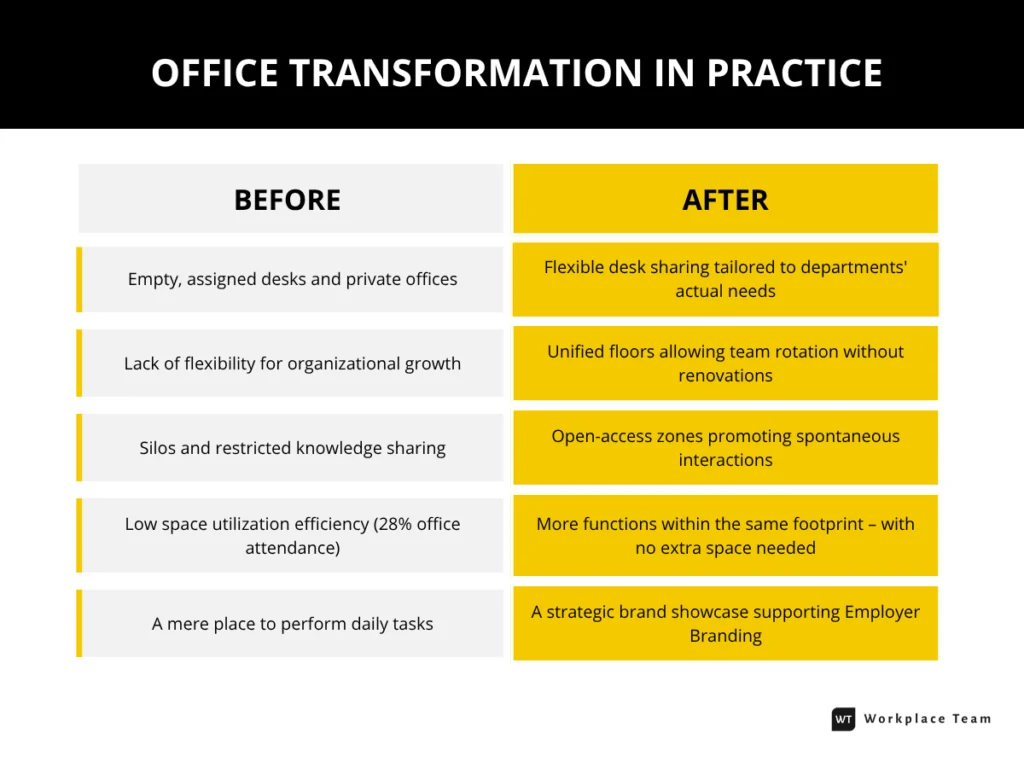
⚬ an established hybrid work model and average office attendance of no more than 28%, creating a need to move away from traditional assigned desks and private offices toward more efficient and flexible solutions,
⚬ rapid company growth, requiring departments to be relocated between floors without costly and time-consuming fit-out changes. Spatial flexibility became one of the project’s key requirements.
⚬ strengthening organizational culture by actively supporting knowledge sharing, cross-functional collaboration, and employee integration. At this scale, reducing silos and encouraging spontaneous interactions was particularly important.
⚬ enhancing employee experience and employer branding by fostering a sense of belonging while reinforcing the company’s image as an attractive employer and trusted business partner, including for the youngest generation of employees.
As a result, the office was intended to evolve from a workplace into a strategic asset supporting business growth, organizational culture, and operational effectiveness.
How we worked? Key project methods
The project was delivered through a structured yet flexible approach, which enabled effective management of its scale and complexity. A key element of the process was the ongoing collaboration with a dedicated project team on the client’s side. This ensured process continuity, rapid information flow, and the ability to make decisions on an ongoing basis. Regular status meetings and transparent communication played an important role, providing full visibility and control over project progress. Frequent project updates, a clear reporting structure, and continuous validation of assumptions helped maintain a high pace throughout the project.
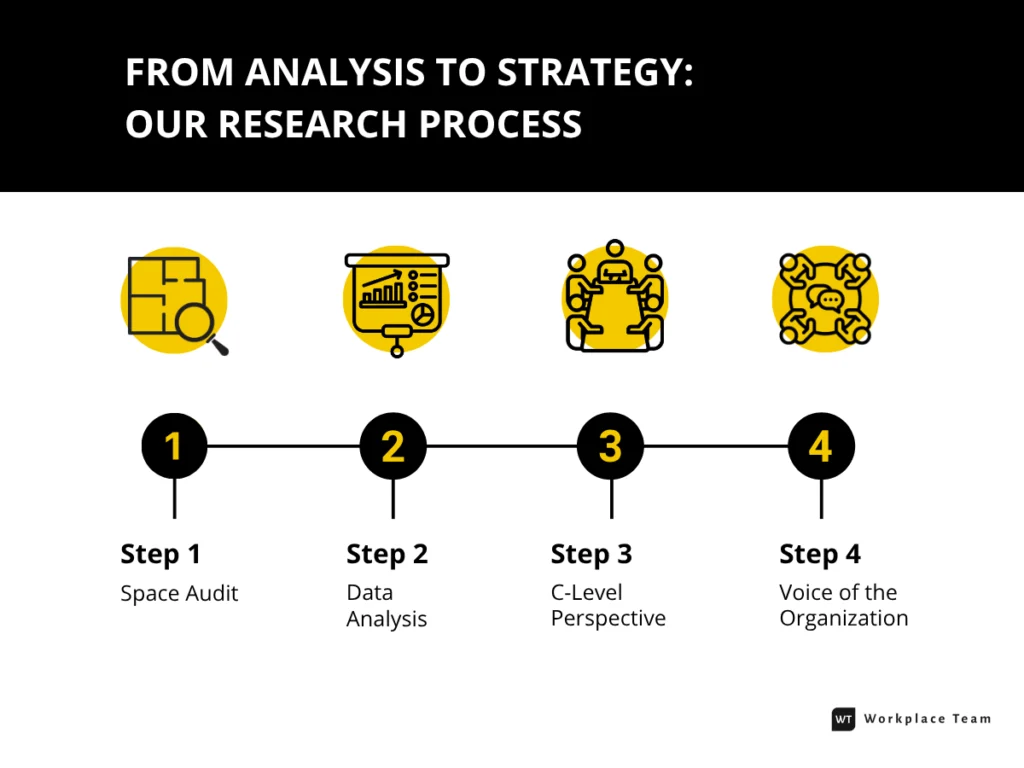
The research process consisted of several complementary stages:
- Workspace audit: We assessed how the office functioned in practice, identifying which solutions were effective and which required improvement.
- Analysis of existing research and internal data: We leveraged available materials, including employee surveys, HR data, and detailed workplace utilization statistics. This allowed us to build recommendations on reliable evidence, avoid duplicating previous analyses, and gain a deeper understanding of the organizational context.
- C-Level perspective: The next stage involved a meeting with the Members of the Management Board, which enabled us to define the project’s key business objectives. This was complemented by individual interviews with senior leaders, allowing us to gain a detailed understanding of the specific characteristics of each business line, as well as their challenges and operational requirements.
- Employee voice: The employee perspective was captured through a survey completed by 988 respondents, including 65 Partners and Directors. This enabled us to collect a broad range of quantitative data on working styles, workplace preferences, and office usage patterns, incorporating the perspectives of both employees and senior leadership.
Combining these methods enabled us to build a comprehensive, multi-dimensional picture of the organization and translate it into tailored workplace solutions.
Outcomes: a new standard for the Workplace
As a result of our work, a comprehensive workplace strategy and detailed spatial guidelines were developed. These became the foundation for subsequent design activities and business decisions. The new office was planned as a flexible, modern environment that supports hybrid working, addressing both the organization’s current needs and its future growth plans.
As part of the project, we developed detailed recommendations for the office’s functional layout, including:
⚬ optimizing the number of workstations and private offices based on actual utilization data,
⚬ implementing a desk-sharing model, including a precise allocation of desks across business lines,
⚬ creating additional shared work settings within the existing footprint, without the need to increase the overall space,
⚬ standardizing functions across all floors and relocating business lines between floors, increasing organizational flexibility and enabling the development of new, more effective workplace habits,
⚬ expanding and enhancing the hospitality floor, including a large social hub and conference facilities.
The final outcome was a cohesive workplace concept capable of addressing current challenges, while providing a solid foundation for future growth.
What does a large global organization prioritize?
Although, due to confidentiality requirements, we cannot disclose the client’s identity, the expectations and challenges faced by the organization are characteristic of many multinational corporations. In this case, several factors were particularly important: making decisions based on data rather than intuition, genuinely engaging different stakeholder groups in the workplace needs assessment process, and maintaining direct dialogue with senior leadership. This approach ensured that workplace decisions were closely aligned with the organization’s business objectives.
Another important and highly valuable aspect of the project was exposing the client to global workplace trends and relevant market benchmarks. This helped create a shared understanding of best practices and facilitated discussions around modern, competitive solutions aligned with the standards of the world’s leading organizations.
These considerations are particularly important in organizations of this scale, where every workplace decision carries significant costs and long-term business implications. With an office footprint exceeding 8,000 sqm, even relatively small changes can result in substantial financial investment. For this reason, all recommendations must be carefully justified and supported by reliable data.
In addition, within multinational organizations, key decisions often require approval from corporate headquarters. This makes it essential to clearly demonstrate both their impact on organizational performance and their alignment with global standards. A data-driven approach, a transparent process, and broad stakeholder engagement help build project credibility and facilitate decision-making at the highest level.
Summary
This project demonstrates that an effective workplace is not the result of intuition, but rather the outcome of a process built on data, stakeholder engagement, and a well-designed methodology. A properly executed workplace strategy not only improves space utilization but, more importantly, creates an environment that genuinely supports business performance, employee experience, and organizational growth.
This approach can be successfully applied across a wide range of industries, helping organizations address the challenges of today’s labour market and respond to evolving employee experience.
We respect our clients’ privacy and value the trust they place in us. This case study describes a real consulting engagement; however, due to confidentiality requirements, the name of the organization and certain project details have not been disclosed.